
Class 6 Literature Worksheet on Comparing Tone Across Texts

Class 6 Literature Worksheet on Comparing Tone Across Texts
Serious vs Funny: Comparing Tone Across Texts for Class 6
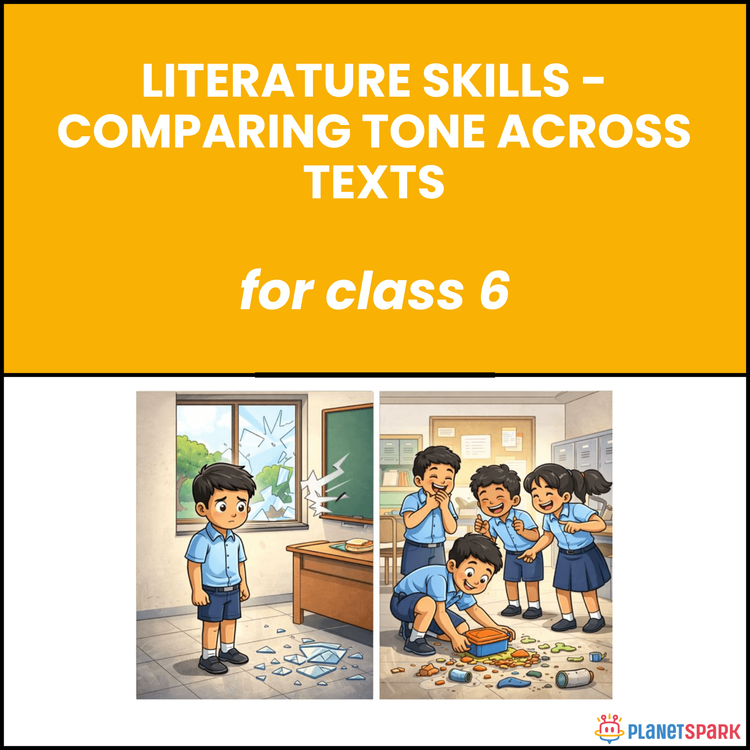
This Grade 6 worksheet helps students understand how tone changes the feeling of a text. Using two contrasting situations—a broken classroom window and a funny lunchbox mishap (as seen on page 3 of the worksheet)—learners explore how similar events can be described with different emotions. Through structured exercises, students develop the ability to identify tone and understand how word choice creates mood.
Why Comparing Tone Matters in Grammar?
Understanding tone helps students interpret emotions and meaning in a text. For Grade 6 learners, this topic is important because:
1. It helps identify the writer’s feelings and attitude.
2. It improves reading comprehension and interpretation.
3. It builds awareness of word choice and expression.
4. It supports expressive and effective writing.
What’s Inside This Worksheet?
This worksheet includes five structured activities to build understanding step-by-step:
🧠 Exercise 1 – Multiple Choice Questions
Students identify tone, differences, and key words that show emotion in both texts.
✏️ Exercise 2 – Fill in the Blanks
Learners complete sentences using concepts related to tone, feelings, and word choice.
📋 Exercise 3 – True or False
Students analyse statements about tone and how it affects meaning.
📝 Exercise 4 – Identify Tone Words/Phrases
Students underline words and phrases that clearly show tone.
🎯 Exercise 5 – Paragraph Writing
Students explain how tone differs in the two texts using examples.
This worksheet ensures students move from recognising tone to analysing how it is created.
✅ Answer Key (For Parents & Educators)
Exercise 1 – MCQs
1. a) serious
2. b) humorous
3. b) both involve a mistake
4. c) one is serious, the other is humorous
5. b) worry
6. c) laughter
7. a) fear of consequences
8. b) friends laughing
9. a) scattered glass and worry
10. b) laughter and smiling
Exercise 2 – Fill in the Blanks
1. serious
2. humorous
3. worry
4. laughter
5. serious
6. humorous
7. feelings
8. situation
9. words
10. different
Exercise 3 – True/False
1. False
2. False
3. False
4. False
5. True
6. True
7. False
8. True
9. True
10. True
Exercise 4 – Underline the Tone Words/Phrases
1. worry filled him as he waited
2. friends burst into laughter
3. the glass lay scattered
4. he could not stop smiling
5. a feeling of concern
6. strict voice echoed
7. joked about the mess
8. waited silently
9. cleaned up the mess
10. a loud noise
Exercise 5 – Paragraph Writing
Sample Answer:
The tones in the two texts are very different. In Text 1, the tone is serious, shown by words like “worry” and “strict voice,” which create tension. In Text 2, the tone is humorous, shown by phrases like “burst into laughter” and “joked about the mess.” Similarly, if someone drops a book and feels scared, it is serious, but if they laugh about it, the tone becomes funny.
Help your child improve reading and writing skills by understanding tone and expression through expert-led learning.
Frequently Asked Questions
They help learners recognize emotions and attitudes in texts, strengthening interpretation in reading comprehension worksheet activities.
It helps students understand the writer’s feelings and improves deeper analysis in CBSE English learning.
They can observe word choices and expressions to compare tone in reading comprehension worksheets.